
Wat Thai Temple and Buddha Statue
Explore Wat Thai Temple in Sarnath, Varanasi, known for its 80-foot standing Buddha statue, Thai-style shrine, gardens and nearby Buddhist heritage sites.
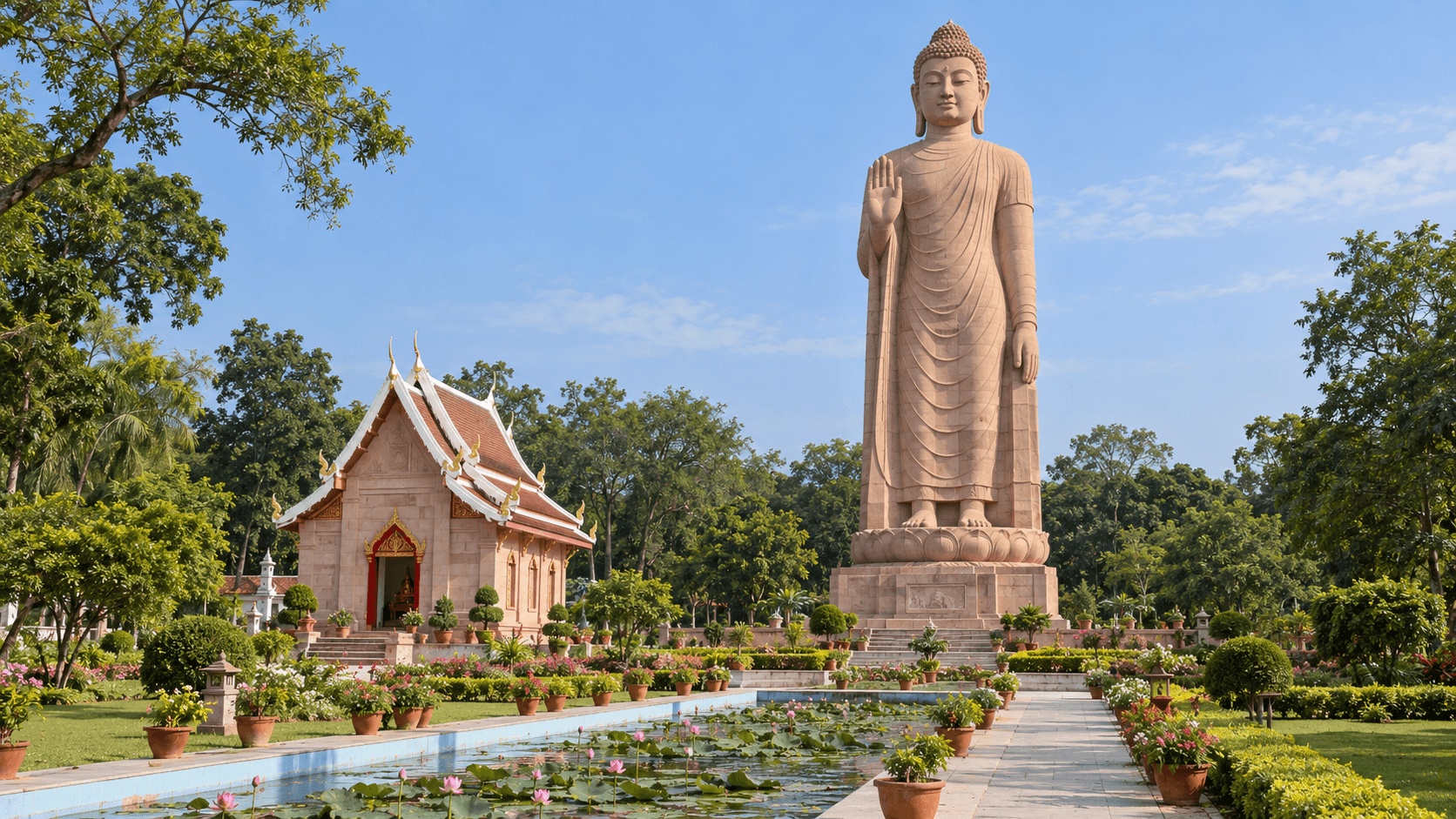
Wat Thai Temple in Sarnath is a Buddhist temple complex known for its Thai-style shrine, landscaped gardens and approximately 80-foot standing statue of the Buddha. Also called the Thai Temple or Thai Buddha Vihar, it is situated near Sarnath Archaeological Museum and makes a convenient stop while exploring the area's Buddhist landmarks.
The statue draws attention through its scale, but the surrounding temple and gardens deserve time too. Together, they introduce visitors to the Thai Buddhist presence in Sarnath, a place revered as the site of the Buddha's first sermon after enlightenment.
Wat Thai Temple and Sarnath's Buddhist heritage
Sarnath's importance extends far beyond its ancient monuments. Alongside the stupas and excavated monasteries are temples representing Buddhist communities from different countries. Wat Thai forms part of this living religious landscape.
The complex offers a different perspective from the nearby archaeological remains: visitors encounter a temple maintained by Thai Buddhist monks, with devotional sculptures and a garden setting. It is a place to approach respectfully, whether visiting for prayer, cultural interest or photography.
The 80-foot standing Buddha statue
The best-known feature of Wat Thai Temple is its towering sandstone Buddha statue. Approximately 80 feet, or 24 metres, tall, it was unveiled on 16 March 2011, during a ceremony attended by Buddhist monks and former Thai prime minister Surayud Chulanont. Contemporary reporting described the project as a symbol of cultural friendship between India and Thailand.
The figure's standing posture distinguishes it from the seated Buddha images visitors encounter elsewhere in Sarnath. Allow space in your visit to view it from farther back, where the full statue and its garden setting are easier to appreciate.
Later reporting describes its design as inspired by the Bamiyan Buddhas of Afghanistan. It is a modern addition to Sarnath's sacred landscape.
The temple, gardens and smaller sculptures
Beyond the large statue, the grounds contain a smaller Thai-style temple and several Buddhist sculptures. Published descriptions record a scene of the Buddha teaching his disciples and an image in bhumisparsha, or earth-touching, posture.
Lawns, planted areas and water features frame the complex. Rather than treating it as a quick photograph stop, leave time to walk through the grounds and notice how the smaller shrine and sculptures relate to the much larger standing figure. The appearance of the gardens and operation of fountains can vary with maintenance and season.
Location and how to reach
Wat Thai Temple is on Rishpattan Road in Sarnath, near the Archaeological Museum, in Varanasi district. Ask your driver for “Thai Temple” or “the 80-foot Buddha statue at Sarnath” to identify the destination clearly.
From Banaras, an auto-rickshaw or cab is a practical way to reach Sarnath. Journey time depends on your starting point and traffic. Once in the main sightseeing area, combine the temple with nearby monuments on foot or use local transport as needed.
Timings, entry and suggested visit duration
Published travel listings describe entry as free and visiting hours as daylight hours; one lists 6:00 AM to 6:00 PM. These are third-party listings rather than a verified current temple notice, so confirm locally before planning an early-morning or late-evening visit.
Allow approximately 30–45 minutes as a planning estimate, with extra time for prayer or a slower walk. Morning or late afternoon is a sensible choice for outdoor photography and avoiding midday heat.
Dress modestly, remove footwear wherever indicated and follow the temple's photography rules. Ask before photographing monks, worshippers or ceremonies, and keep paths clear for other visitors.
Places to combine with your visit
A visit to Wat Thai fits naturally into a wider Sarnath itinerary:
Sarnath Archaeological Museum: For Buddhist sculptures and the Lion Capital of Ashoka.
Dhamek Stupa and the archaeological remains: For the surviving monuments of ancient Sarnath.
Mulagandha Kuti Vihara: For another important Buddhist temple, known for its murals depicting the Buddha's life.
Chaukhandi Stupa: Another major historic monument in the Sarnath area.
Check each attraction's opening arrangements separately when planning the route.
Wat Thai Temple adds a contemporary chapter to a day spent exploring Sarnath's ancient history. Its standing Buddha is the main landmark, while the smaller temple and garden sculptures give visitors reasons to pause and look more closely.
THE CONVERSATION CONTINUES
Conversations from the city
A question, a local tip, or a memory of your own. There’s room for your voice here.
Every perspective adds a little more.
Sign in to share yours, ask a question, or reply to the community.