
Shree Annapurna Mandir
Explore Shree Annapurna Mandir in Varanasi, its sacred traditions, golden idol, annadanam and location near Kashi Vishwanath, with practical visitor tips.
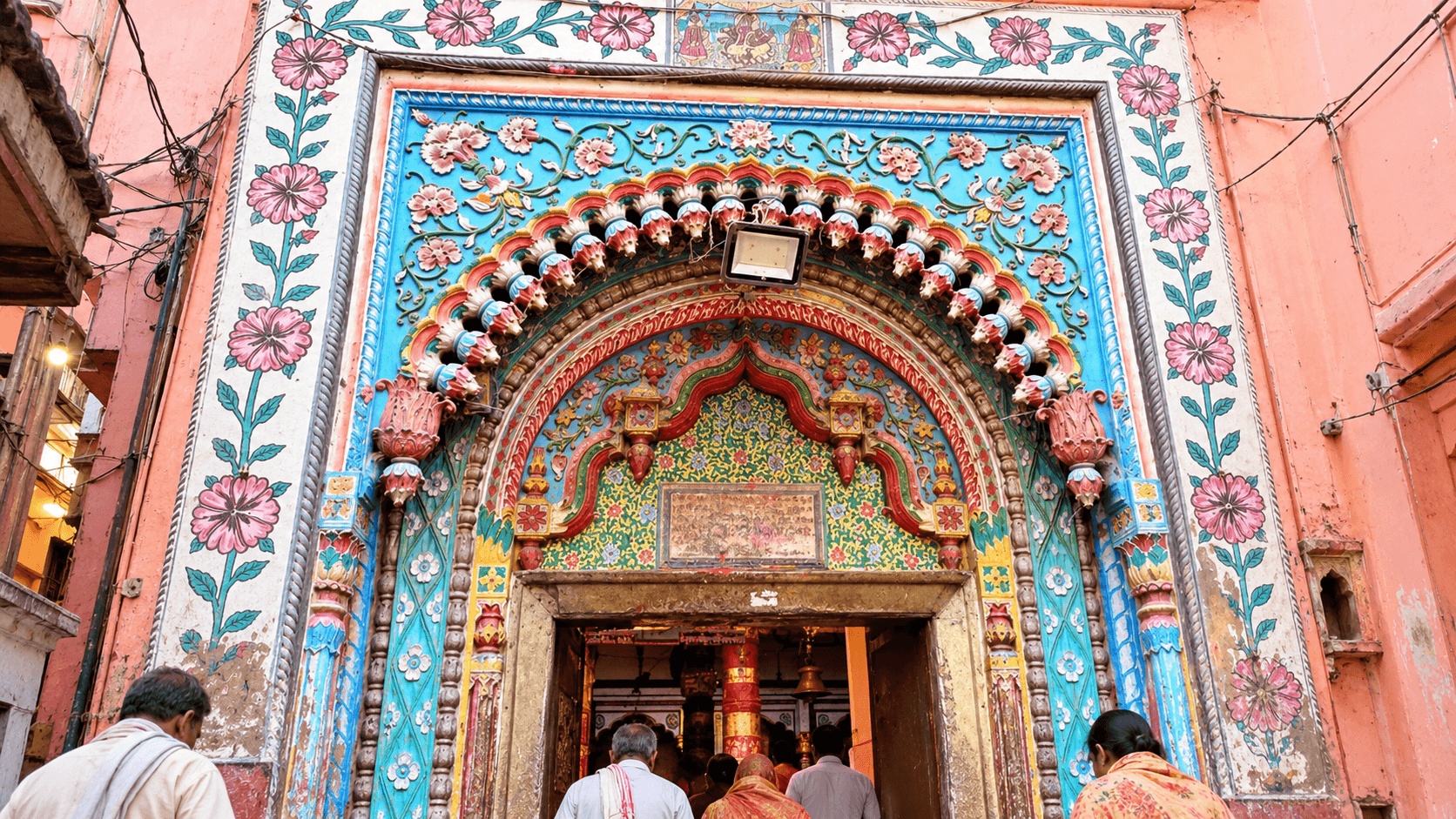
Shree Annapurna Mandir in Varanasi is dedicated to Maa Annapurna, the Hindu goddess of food and nourishment and a form of Goddess Parvati. Situated in Vishwanath Gali, beside Kashi Vishwanath Temple, it is an important shrine in the religious life of Banaras. It is also known as Annapurna Devi Mandir, Annapurna Mata Mandir and Annapurna Bhavani Temple.
For devotees, a visit brings together two closely connected traditions of Kashi: worship of Lord Vishwanath and gratitude to the mother who provides sustenance. The temple’s association with feeding people gives this belief a practical expression through annadanam, the offering of food.
Maa Annapurna and the story of nourishment
The name Annapurna combines the Sanskrit words anna, meaning food, and purna, meaning full or complete. The goddess represents nourishment, generosity and the essentials that sustain life.
According to a widely told Hindu legend, Lord Shiva described the material world, including food, as maya, or illusion. Parvati withdrew her nourishing presence, and the world experienced hunger. She then appeared as Annapurna in Kashi, where she offered food, including to Shiva.
The story expresses the importance of nourishment even within spiritual life. Devotees approach Maa Annapurna with prayers for the well-being of their households and gratitude for the food they receive.
History and architecture of Shree Annapurna Mandir
The present temple is commonly dated to 1729 and associated with Maratha patronage. It belongs to the historic religious landscape around Vishwanath Gali and is administered through Annapurna Math.
The temple follows the Nagara tradition of architecture, with a courtyard, a sanctum and a pillared porch. Its setting within the old city places it among closely packed lanes and neighbouring shrines. For visitors interested in Banaras’s built heritage, the relationship between the courtyard, the worship space and the surrounding neighbourhood is part of its character.
Daily darshan and the golden idol
The temple is associated with two principal images of Maa Annapurna: a brass image available for regular darshan and a golden image revealed during a special annual festival period.
The Swarna Annapurna darshan takes place around Dhanteras, Diwali and Annakoot. Devotees gather in large numbers for this occasion, and the temple also distributes traditional khazana offerings, associated with blessings for household prosperity.
The golden idol’s opening should be understood as an annual festival observance. The exact dates, number of darshan days and visiting arrangements must be checked each year. Reporting from 2025, for example, described a five-day opening from Dhanteras through Annakoot.
Annadanam: the temple’s food-sharing tradition
Feeding people is central to the temple’s identity. The Kashi Annapurna Annakshetra Trust operates meal services associated with the shrine, carrying the idea of nourishment beyond the sanctum.
The trust lists two annadanam units in the temple neighbourhood, including one behind Annapurna Devi Temple. Visitors interested in receiving a meal or contributing to the service should ask the trust office about the current location, serving hours and arrangements.
The annakshetras provide free meals to pilgrims. Their continuing role in the city was also documented in March 2026 reporting on the resumption of kitchen services following a temporary interruption.
When participating, follow the volunteers’ directions, take only what you can eat and avoid wasting food.
Festivals and religious traditions
Annakoot is an important celebration at Annapurna Mandir. Food offerings are arranged before the goddess and subsequently shared as prasad, reflecting the shrine’s association with abundance and nourishment.
Navratri also holds significance. The temple is associated with the worship of Maa Annapurna as Mahagauri, particularly on the eighth day of the autumn Navratri.
Festival visits require more flexibility than an ordinary visit. Allow extra time for queues, follow the designated entry and exit routes, and confirm the current programme if you are travelling specifically for the golden idol’s darshan.
Location and how to reach
Address: Shree Annapurna Mandir, D-9/1, Vishwanath Gali, Varanasi, Uttar Pradesh – 221001. The temple stands beside Kashi Vishwanath Temple in the old city.
Godowlia is a useful landmark when planning your approach. Travel towards the nearest permitted drop-off point and complete the final stretch through the lanes on foot. Vehicle access and pedestrian routes can change with crowd-control arrangements, so ask for Annapurna Mata Mandir in Vishwanath Gali and follow directions from temple staff or police.
If you are combining the visit with Kashi Vishwanath, check the access and belongings rules for both temples before setting out.
Timings and practical visitor information
Detail | Visitor information |
|---|---|
Published opening hours | The government Kashi portal lists 5:00 AM–10:30 PM. Other published schedules differ, so confirm the current darshan sessions and ritual breaks with the temple. |
Entry fee | Ordinary entry is listed as free by travel references. Ask the temple office separately about any requested puja or paid service. |
Time to allow | As a planning estimate, keep 30–45 minutes, excluding queues. Festival visits can take substantially longer. |
Golden idol | Available during the annual Diwali-season opening; confirm that year’s announcement. |
Annakshetra enquiry | The trust lists +91 84293 61807 for Unit 1. Confirm meal arrangements directly. |
A morning visit can fit conveniently into an old-city temple walk. If attending an aarti is your priority, confirm its specific timing rather than relying on the overall opening hours.
Etiquette and accessibility
Remove footwear at the designated place and wear clothing appropriate for a place of worship.
Ask before taking photographs, especially near the sanctum and during rituals.
Keep passageways clear and respect devotees waiting for darshan.
Follow the current instructions for bags, phones and other belongings.
Visitors with limited mobility should enquire about the approach and any steps before visiting, particularly during the annual golden-idol opening.
Places to combine with your visit
Kashi Vishwanath Temple: The neighbouring Shiva shrine is the most natural companion to an Annapurna Mandir visit. Plan enough time for its separate queue and entry arrangements.
Vishwanath Gali: The surrounding lanes form part of the visit itself and provide a sense of the old city’s closely connected religious neighbourhood.
Dashashwamedh Ghat: Continue towards the riverfront for a ghat visit or plan a separate evening stop for Ganga Aarti. The ghat is close to the Kashi Vishwanath area, although walking time depends on crowds and the route.
THE CONVERSATION CONTINUES
Conversations from the city
A question, a local tip, or a memory of your own. There’s room for your voice here.
Every perspective adds a little more.
Sign in to share yours, ask a question, or reply to the community.