
Mulagandha Kuti Vihara
Explore Mulagandha Kuti Vihara in Sarnath, Varanasi, with its Buddhist history, Japanese murals, sacred relics and practical advice for planning your visit.
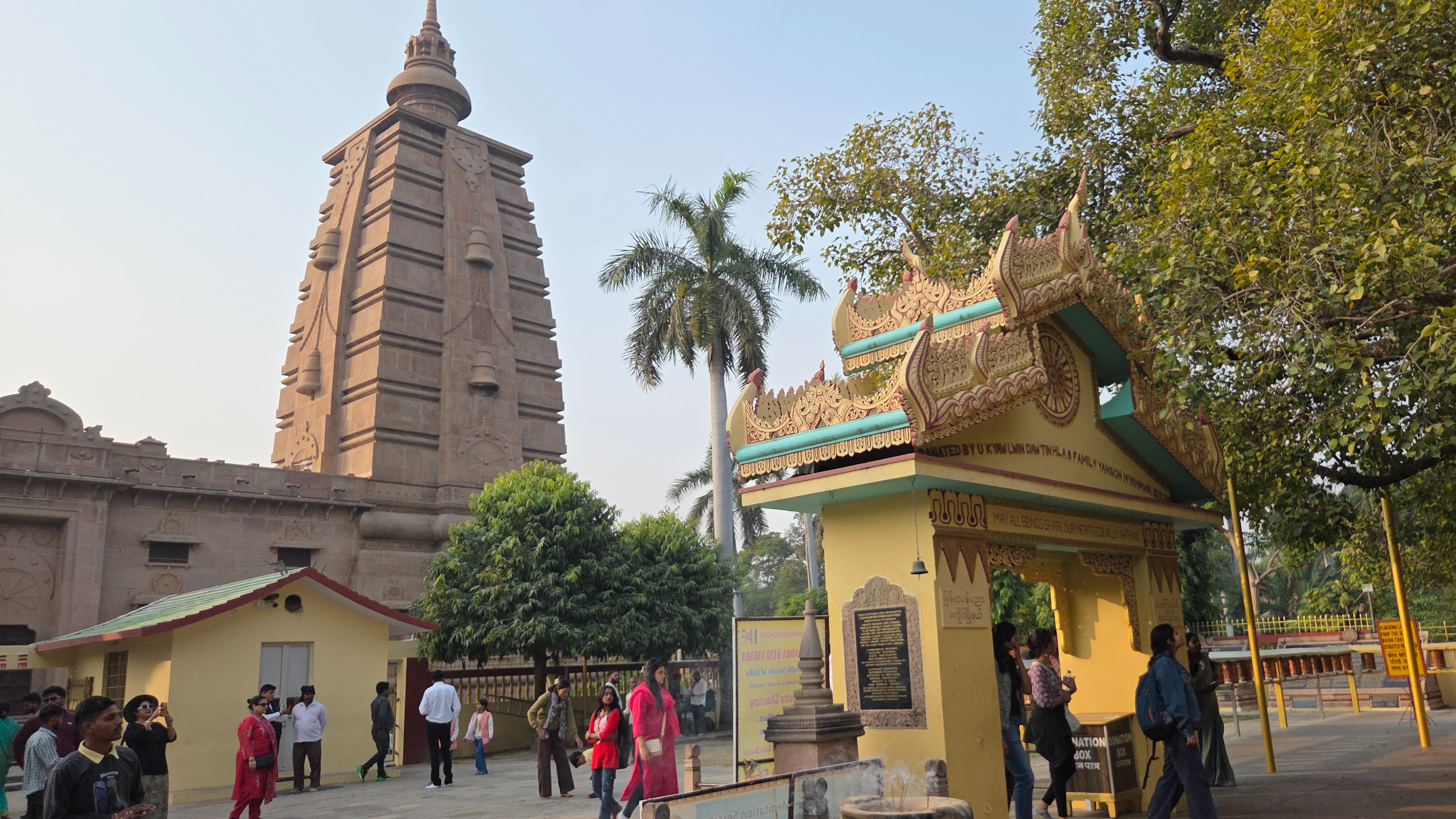
Mulagandha Kuti Vihara is a Buddhist temple in Sarnath, near Varanasi, known for its paintings of the Buddha’s life, sacred relics and association with the Maha Bodhi Society of India. Opened in 1931, it is an active place of worship that adds a living religious dimension to a visit to Sarnath’s ancient monuments.
For visitors exploring Banaras beyond its riverfront and old-city temples, the vihara offers an opportunity to learn about Buddhist pilgrimage, modern religious revival and the artistic connections between India and Japan.
History of Mulagandha Kuti Vihara
The present temple was built through the efforts of Anagarika Dharmapala, founder of the Maha Bodhi Society. The Society records its opening ceremony on 11 November 1931, describing the vihara as one of the major achievements of his work.
Dharmapala helped renew attention to India’s Buddhist sacred places. At Sarnath, the temple established a place for worship alongside the archaeological remains that preserve the area’s much older history.
The modern vihara should be distinguished from the ancient Mulagandhakuti or Main Shrine remains within Sarnath’s archaeological site. The similar names can cause confusion: the standing temple visited today dates to the twentieth century, while the excavated shrine belongs to the ancient complex.
Sarnath and the Buddha’s First Sermon
Sarnath is revered as the place where the Buddha delivered his first sermon after attaining enlightenment at Bodh Gaya. This teaching is associated with the turning of the Wheel of Dharma, or Dharmachakra Pravartana.
Mulagandha Kuti Vihara belongs to this wider sacred landscape. Its significance comes from its location at Sarnath, its relics and its continuing religious activities. Visitors should understand the modern building as a later place of worship connected with that tradition, rather than a surviving structure from the Buddha’s lifetime.
What to See at Mulagandha Kuti Vihara
Murals by Japanese artist Kosetsu Nosu
The interior wall paintings are among the temple’s defining features. Created by Kosetsu Nosu, they depict episodes from the Buddha’s life and bring a narrative dimension to the prayer hall.
Nosu had previously studied Buddhist art in India and worked on reproductions of the Ajanta paintings. That experience informed his work at Sarnath. The paintings also represent a significant artistic connection between Japan and India during the development of the modern temple.
Take time to look at the scenes individually rather than treating the hall as a quick photo stop. Keep a respectful distance from the walls and follow the temple’s photography instructions.
The Buddha image and sacred relics
A Buddha image forms the focus of the main shrine. The vihara also houses relics venerated as those of the Buddha. Government documentation records relics associated with discoveries at Taxila and Nagarjunakonda as being enshrined here.
The presence of these relics makes the temple an important devotional destination. A regular visit should not be planned on the assumption that the relics themselves will be on public display; ask the Sarnath centre about any announced viewing arrangements.
The Bodhi tree
The Bodhi tree beside the temple is another devotional stop. Reporting on its history records that a shoot was brought from Sri Lanka and planted at Sarnath by Dharmapala in 1931.
For Buddhist pilgrims, the tree connects the temple with the wider tradition of venerating the Bodhi tree associated with the Buddha’s enlightenment. Visitors can include this part of the grounds while allowing space for those praying.
An Active Buddhist Centre
Mulagandha Kuti Vihara continues to function as a religious institution. The Maha Bodhi Society lists daily Dhammachakka recitation among its Sarnath activities, alongside a library and educational services.
This is useful context for a visit: prayer and community life remain central to the place. If a service is taking place, enter quietly and follow the guidance of the monks or staff.
Location and How to Reach
The temple is in Sarnath, Varanasi, Uttar Pradesh 221007. Sarnath lies approximately 13 km north-east of Varanasi, although the road distance depends on where your journey begins.
From Banaras, an auto-rickshaw or taxi is a practical option. Specify Mulagandha Kuti Vihara, Maha Bodhi Society, Sarnath as your destination to distinguish the temple from the archaeological entrance and museum.
The vihara can be included in the same outing as Dhamek Stupa and the Sarnath Archaeological Museum.
Timings, Entry and Visit Planning
Published visitor listings give conflicting opening hours and entry information. The Society’s official Sarnath page provides contact details but does not state a clear visitor timetable or admission tariff. Confirm these directly before travelling, particularly if you want to attend prayers.
Suggested time to allow: Around 30–60 minutes for the shrine, paintings and grounds; this is a planning estimate.
Photography: Check the rules before taking photographs inside.
Accessibility: Visitors who need step-free access or seating should ask the centre about current arrangements.
For a more comfortable outdoor visit, consider the cooler months. In hot weather, choose a morning or late-afternoon slot within the confirmed opening hours.
Visitor Etiquette
Dress modestly and remove footwear wherever instructed. Keep phones silent, speak softly and avoid interrupting prayers or photographing worshippers without permission.
Do not touch the murals, shrine objects or religious offerings. Ask before using flash, a tripod or other equipment inside the hall.
Nearby Places to Include
Dhamek Stupa and the archaeological remains: Explore Sarnath’s ancient Buddhist monuments and excavated structures.
Sarnath Archaeological Museum: See sculptures and other finds from the site, including the Lion Capital of Ashoka. Check the museum’s own opening schedule separately.
Chaukhandi Stupa: Include this monument as another stop on a wider Sarnath outing. It is a separate component of Sarnath’s ancient Buddhist heritage.
Allow additional time for these places rather than treating them as part of the temple’s suggested visit duration.
THE CONVERSATION CONTINUES
Conversations from the city
A question, a local tip, or a memory of your own. There’s room for your voice here.
Every perspective adds a little more.
Sign in to share yours, ask a question, or reply to the community.