
Japanese Temple, Sarnath
Explore the Japanese Temple in Sarnath, Varanasi, known for its reclining Buddha and Japanese architecture, with history, visiting tips and nearby sights.
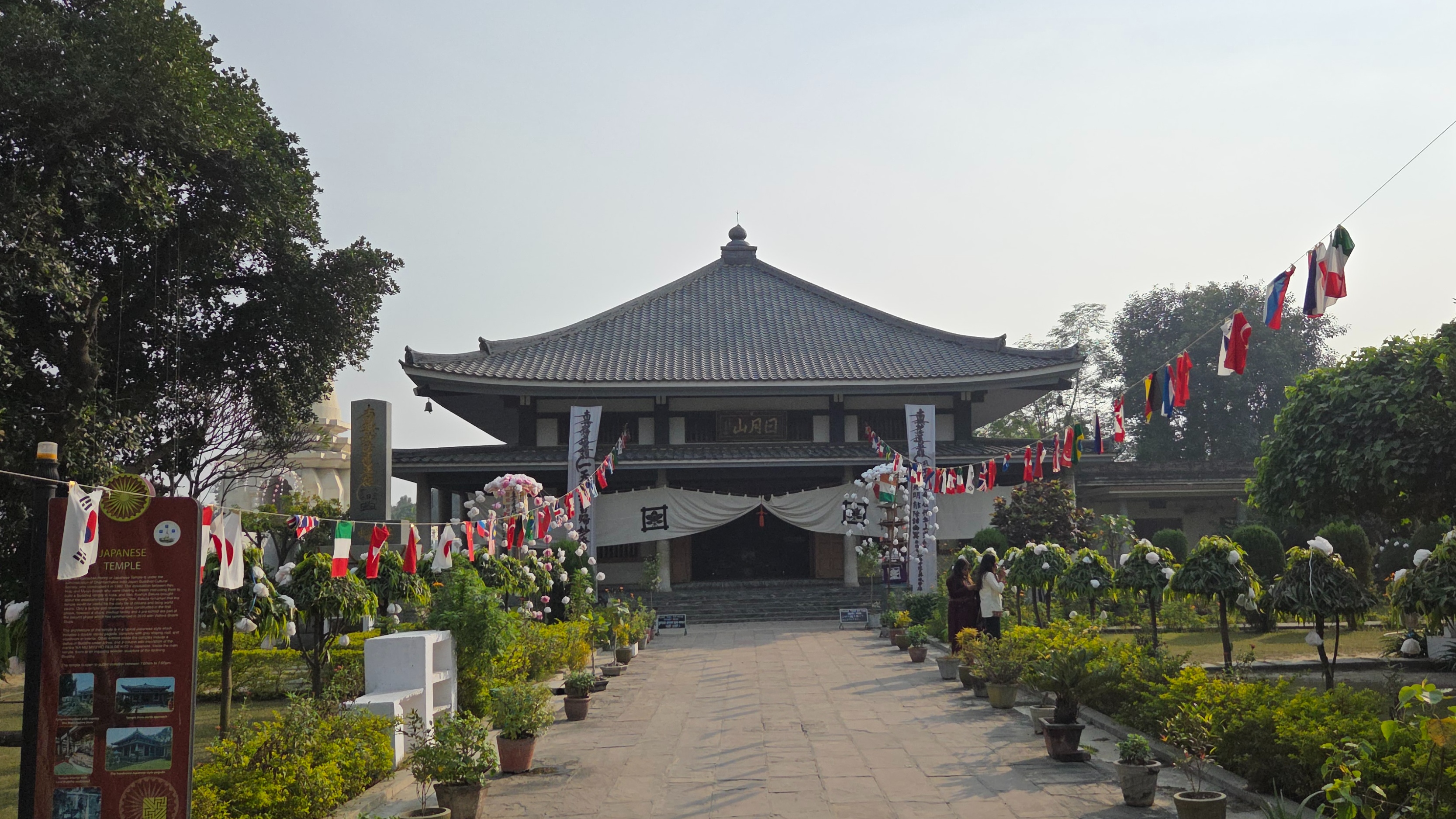
The Japanese Temple in Sarnath, commonly known as Nichigai Suzan Horinji Temple, is a Buddhist place of worship in the Varanasi district of Uttar Pradesh. Its Japanese-style architecture and wooden reclining Buddha make it a distinctive stop on a Sarnath visit. Nichiren Shu publications use the name Nichigatsuzan Horinji for the temple.
Located near Sarnath’s main market, the temple offers visitors an opportunity to explore the Japanese Buddhist presence in a landscape closely associated with the Buddha’s first teachings. It can be included in a wider trip to Sarnath’s stupas, museum and monasteries.
History of the Japanese Temple in Sarnath
Sarnath is revered in Buddhist tradition as the place where Gautama Buddha delivered his first sermon after attaining enlightenment. This association has drawn pilgrims and Buddhist communities from different countries, including Japan.
The Japanese Temple’s history is documented in an October 2003 issue of Nichiren Shu News. According to the publication, Reverend Hojo Sasaki and his wife, Myojo Sasaki, first travelled to India in 1967 with the intention of opening a seminary for Nichiren Buddhist priests at Sarnath. Their work eventually led to the construction of Horinji, which was formally inaugurated in November 1992.
The same report records Myojo Sasaki’s installation as the temple’s chief priestess in August 2003, following her husband’s death earlier that year. This history places Horinji within Sarnath’s modern Buddhist revival and its continuing relationship with Japanese religious communities.
Japanese Architecture and the Reclining Buddha
The temple is recognisable by its pagoda-style form, with a two-tiered roof and eaves that curve upwards. These architectural features give the shrine a different appearance from the ancient brick and stone monuments elsewhere in Sarnath.
Inside, the principal visual attraction is a large wooden statue of the reclining Buddha. Published descriptions also record a Buddha image beneath a tree near the entrance and a pillar bearing Japanese inscriptions. Together, the roofline, sculptures and inscriptions introduce visitors to a Japanese expression of Buddhist sacred architecture.
Take time to observe the shrine respectfully rather than treating it only as a photography stop. If worshippers are praying, give them space and follow the directions of temple staff.
Religious and Cultural Significance
Horinji is connected with the Nichiren Buddhist tradition. Historical reports from the temple describe sutra recitation, prayer and the participation of local residents alongside Japanese devotees. A 2010 account also discusses the Shanti Stupa project at Horinji and its aim of encouraging peace and harmony.
For visitors exploring Banaras beyond the riverfront, the temple provides a useful introduction to Sarnath’s international Buddhist connections. It shows how a place associated with the Buddha’s early teachings continues to support living religious traditions.
Location and How to Reach
The Japanese Temple is near the main market in Sarnath, behind the government tourist bungalow, according to published travel descriptions. It is also listed beside the Vishwa Shanti Stupa. Ask for either “Japanese Temple” or “Horinji Temple” when seeking local directions.
The Varanasi district administration places Sarnath approximately 10 kilometres from Varanasi, although your actual journey will depend on where you start in the city. You can plan the visit by auto-rickshaw, taxi or private vehicle and combine it with other Sarnath attractions. Check the exact temple pin before starting your journey.
Timings, Entry and Planning Your Visit
Published travel listings commonly give opening hours of 6:00 AM to 6:00 PM and describe entry as free. Another travel guide describes access as sunrise to sunset. A current temple-issued schedule could not be verified, so treat these as indicative details and confirm locally, especially before an early-morning or late-evening visit.
As a planning suggestion, allow 20–30 minutes for a brief visit, with additional time if you wish to sit quietly and access permits. Choose a daylight visit and leave enough time for the other sites on your itinerary.
Wear modest clothing, remove footwear wherever instructed and keep your phone silent. Ask before photographing the shrine interior, monks or worshippers. If step-free access is essential, check entrance and shrine access arrangements in advance.
Places to Visit on the Same Sarnath Trip
You can combine the Japanese Temple with these places in Sarnath:
Dhamek Stupa: A major monument within Sarnath’s archaeological landscape.
Sarnath Archaeological Museum: A place to explore Buddhist sculptures and other antiquities recovered from Sarnath.
Mulagandha Kuti Vihar: A Buddhist temple associated with the Maha Bodhi Society.
Chaukhandi Stupa: Another important monument to include in a broader Sarnath itinerary.
Check each attraction’s opening arrangements separately when planning your route.
THE CONVERSATION CONTINUES
Conversations from the city
A question, a local tip, or a memory of your own. There’s room for your voice here.
Every perspective adds a little more.
Sign in to share yours, ask a question, or reply to the community.