
Best Time to Visit Banaras: A Month-by-Month Guide to Varanasi
Planning a trip to Banaras? Discover the best time to visit Varanasi, from pleasant winter mornings and sunrise boat rides to Dev Deepawali, Maha Shivratri, monsoon views, and summer travel tips.
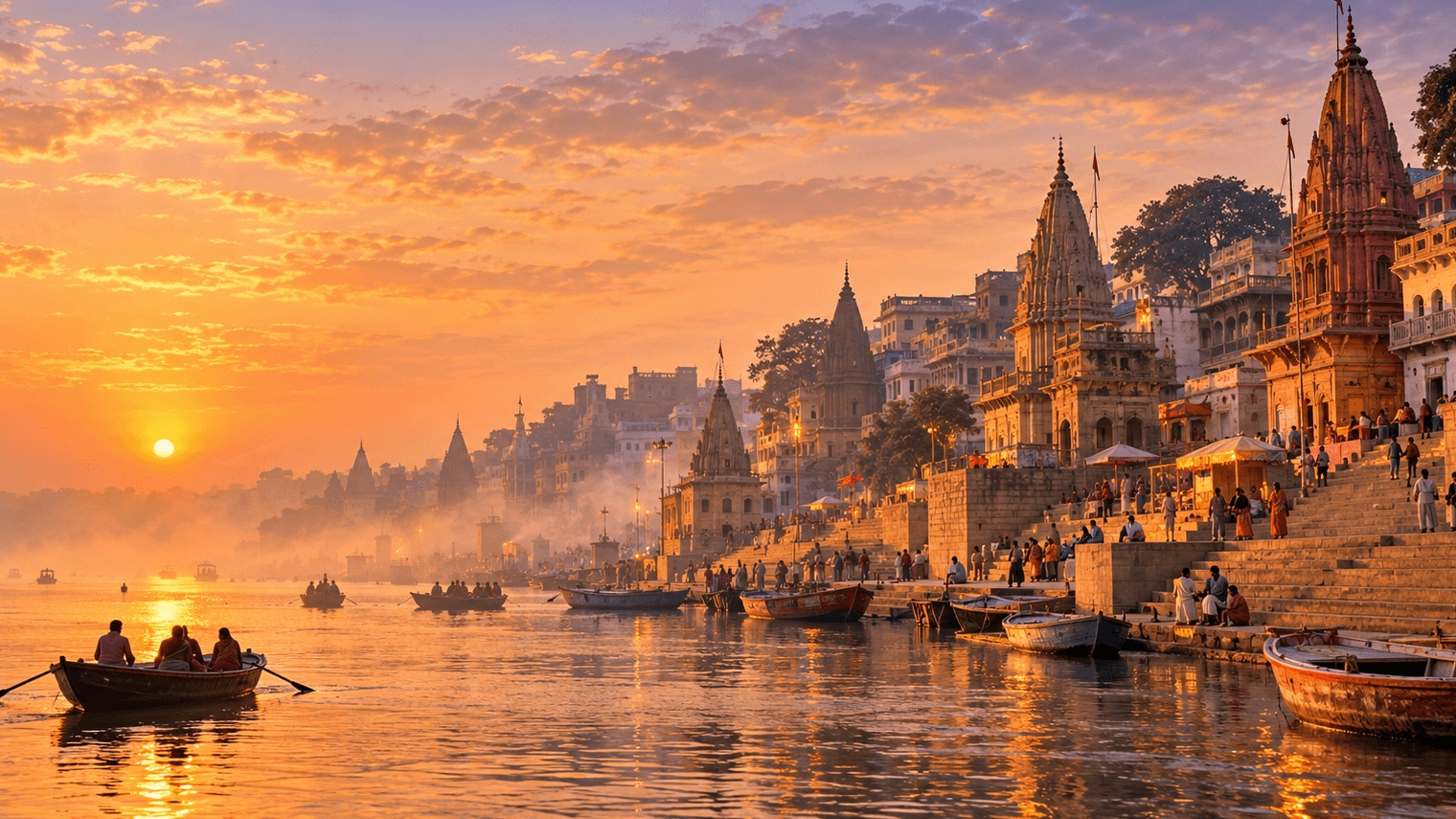
Banaras is a city that changes with the seasons.
A winter morning can begin with mist floating above the Ganga, temple bells echoing through the lanes and passengers wrapped in shawls waiting for a sunrise boat ride. Visit during the monsoon and the same river can look dramatically different. Come during Dev Deepawali and the ghats transform under the glow of countless diyas.
Technically, Banaras can be visited throughout the year, but for most travellers, the best time to visit is from October to March. India's official tourism portal also recommends these months because the cooler weather makes walking through the old city, exploring the ghats and taking boat rides much more comfortable.
If you want an even simpler answer:
November to February is the best period for a first trip to Banaras.
But the best month ultimately depends on what you want to experience.
October: When Banaras Starts Becoming Pleasant
October marks the transition from the humid monsoon months towards cooler weather.
Days can still feel warm, particularly in the afternoon, but mornings and evenings gradually become more comfortable. Official tourism information lists October temperatures broadly between about 16°C and 36°C.
This is a good time for travellers who want reasonably pleasant weather without experiencing the colder winter mornings of December and January.
October also begins one of the most culturally interesting periods in the city, with the festive season bringing additional energy to markets, temples and neighbourhoods.
Best for: sightseeing, photography, ghat walks and early-season travellers.
November: One of the Best Months to Visit Banaras
If you had to choose just one month, November would be one of our strongest recommendations.
The weather becomes significantly more comfortable, sunrise boat rides are pleasant and spending hours exploring the ghats or walking through the old lanes becomes easier.
November can also bring one of Banaras's most spectacular celebrations: Dev Deepawali.
Celebrated on Kartik Purnima, Dev Deepawali transforms the riverfront as the ghats are illuminated with enormous numbers of earthen lamps. The celebrations include rituals, Ganga Aarti and cultural performances.
For travellers planning specifically for 2026, Incredible India currently lists Dev Deepawali in Varanasi on 24 November 2026.
There is one trade-off: this is an extremely popular period. Expect larger crowds and higher demand for hotels, boats and transport around major festival dates.
Best for: first-time visitors, culture, festivals, photography and pleasant weather.
December: Beautiful Winter Mornings
December brings proper winter to Banaras.
Official tourism figures put the broad December temperature range at roughly 6°C to 29°C, although conditions vary considerably between chilly mornings and sunnier afternoons.
This is arguably when Banaras looks most atmospheric.
Wake up before sunrise and head towards the river. Mist sometimes hangs above the Ganga while boats slowly emerge from the haze. Temples begin their morning rituals and chai stalls become particularly inviting.
December is also excellent if you enjoy exploring on foot because the intense heat of summer is completely absent.
Bring a jacket or warm layer, particularly if you plan to take an early-morning boat ride.
Best for: sunrise experiences, walking, photography and couples or families.
January: Cold, Misty and Atmospheric
January is typically among the coldest months in Banaras.
Official tourism information shows a broad range of around 4.5°C to 28°C.
Early mornings can feel surprisingly cold, especially on the river. Fog can occasionally reduce visibility, which means you may not always get the perfect golden sunrise.
But that is also part of January's character.
A misty Ganga, people warming themselves around small fires, steaming glasses of chai and the gradual appearance of ghats through the fog create a version of Banaras that feels completely different from summer.
January-February is also associated with Magh-period religious activity; Assi Ghat, for example, becomes particularly lively around Magh Mela.
Best for: travellers who enjoy winter, spirituality and atmospheric photography.
February: Possibly the Best Balance
February might be the most balanced month of all.
The harshest winter mornings begin to disappear while the intense summer heat is still some distance away.
You can comfortably spend the morning exploring temples, walk along the ghats during the afternoon and return to the river for evening Ganga Aarti.
It is therefore an excellent choice for travellers planning a packed itinerary.
Depending on the Hindu calendar, Maha Shivratri may also fall around February or March. In a city so deeply associated with Lord Shiva, Maha Shivratri brings extraordinary religious energy and very large crowds.
Best for: pleasant weather, sightseeing, walking and first-time visitors.
March: Good Weather, but Summer Is Approaching
March sits at the edge of the comfortable travel season.
Early March can still be pleasant, particularly during mornings and evenings, but temperatures rise quickly as the month progresses. Tourism data shows that March temperatures can reach around 39°C at the upper end.
If you visit during March, structure your day around the weather:
Start before sunrise, rest during the warmer afternoon and return to the ghats in the evening.
Best for: shorter trips and travellers comfortable with warmer weather.
April to June: Banaras in Summer
April, May and June are usually the most challenging months for sightseeing.
Official tourism information shows maximum temperatures potentially climbing above 40°C, with May listed as reaching around 45°C at the upper end.
That does not mean you cannot visit Banaras in summer. The temples continue their rituals, Ganga Aarti continues and daily life carries on.
But your itinerary needs to change.
Start around sunrise and use the early morning for boat rides and ghats. Spend the hottest part of the afternoon resting, eating or visiting indoor attractions, and explore again after sunset.
If comfortable sightseeing is your priority, however, there are better months.
Best for: pilgrims, budget-conscious travellers and people who don't mind extreme heat.
Avoid if: you want long heritage walks or full-day outdoor itineraries.
July to September: Monsoon in Banaras
Monsoon gives Banaras another personality.
Cloudy skies, rain-soaked lanes and the swollen Ganga can make the city look dramatic and surprisingly beautiful.
But rain also makes travel less predictable.
Some riverside areas may become harder to access when the Ganga rises significantly, while heavy rainfall can complicate ghat walks and other outdoor plans. Anyone visiting during the monsoon should therefore keep their itinerary flexible and check local conditions before planning river activities.
For photographers and repeat visitors, however, this can be a fascinating season because Banaras feels very different from the familiar winter photographs.
Best for: repeat visitors, monsoon photography and slower trips.
Not ideal for: travellers whose main priority is boating and extensively exploring the ghats.
Best Time for a Sunrise Boat Ride
A sunrise boat ride is one of the classic Banaras experiences.
Morning boat rides along the ghats as a major visitor attraction and particularly highlights the riverfront at dawn.
For comfortable weather, November to February is an excellent period.
Leave before sunrise so you can watch the city gradually wake up from the river.
Best Time to Experience Ganga Aarti
There isn't really a bad season for Ganga Aarti.
The best-known evening ceremony takes place at Dashashwamedh Ghat, while Assi Ghat is particularly associated with the morning Subah-e-Banaras experience. The official Kashi portal notes that aartis are also performed at several other ghats.
During peak winter and festival periods, arrive early because the riverfront can become extremely crowded.
Best Time for Festivals
If experiencing Banaras during a major celebration is your priority, plan around the festival rather than simply choosing the coolest weather.
Dev Deepawali is perhaps the most visually spectacular time to see the ghats, with Kartik Purnima celebrations filling the riverfront with lamps.
Maha Shivratri offers a completely different experience centred around Lord Shiva, temples, processions and devotion.
Diwali and the broader autumn festival season are also excellent times to experience the city's religious and cultural character.
The trade-off is crowds. Hotels can fill quickly and popular temples, roads and ghats become much busier than usual.
So, When Should You Visit Banaras?
For most travellers, we would break it down like this:
Your priority | Best time |
|---|---|
Best overall weather | November–February |
First trip to Banaras | November–February |
Dev Deepawali | Kartik Purnima, usually Oct/Nov |
Photography | November–January |
Sunrise boat rides | October–March |
Walking the ghats | November–February |
Maha Shivratri experience | February/March, depending on the year |
Fewer peak-season tourists | October or March |
Budget travel | Summer/monsoon |
Monsoon atmosphere | July–September |
Our Recommendation
If this is your first visit to Banaras, aim for mid-November to February.
You'll get cooler weather, comfortable walks through the old city, beautiful mornings on the Ganga and evenings that are pleasant enough to spend several hours around the ghats.
If festivals matter more than comfort, build your trip around Dev Deepawali or Maha Shivratri instead.
And remember that Banaras isn't really a city you experience between sightseeing stops.
Wake up before sunrise. Walk through lanes without constantly checking Google Maps. Stop for chai. Sit quietly on a ghat for a while. Take a boat when the river is calm. Return after sunset to watch the riverfront change again.
The season can influence your trip, but the best way to experience Banaras is to give the city enough time to reveal itself.
THE CONVERSATION CONTINUES
Conversations from the city
A question, a local tip, or a memory of your own. There’s room for your voice here.
Every perspective adds a little more.
Sign in to share yours, ask a question, or reply to the community.