
Baba Keenaram Ashram
“ Baba Keenaram Sthal at Kring Kund is the spiritual heart of Varanasi's Aghor tradition. Discover the story of Baba Keenaram, the sacred kund and dhuni, Aghor philosophy, and what to know before visiting this remarkable Aghor Peeth. ”
Hidden amid the busy neighbourhoods of Varanasi, Baba Keenaram Sthal at Kring Kund is regarded as one of the most important centres of the Aghor tradition. From its sacred kund and continuously revered dhuni to the legacy of Baba Keenaram.
Baba Keenaram Ashram: An Important Aghor Peeth in Varanasi
Varanasi is usually introduced through its ghats, the Ganga and temples such as Kashi Vishwanath. But the city's spiritual landscape is much wider than its most famous landmarks.
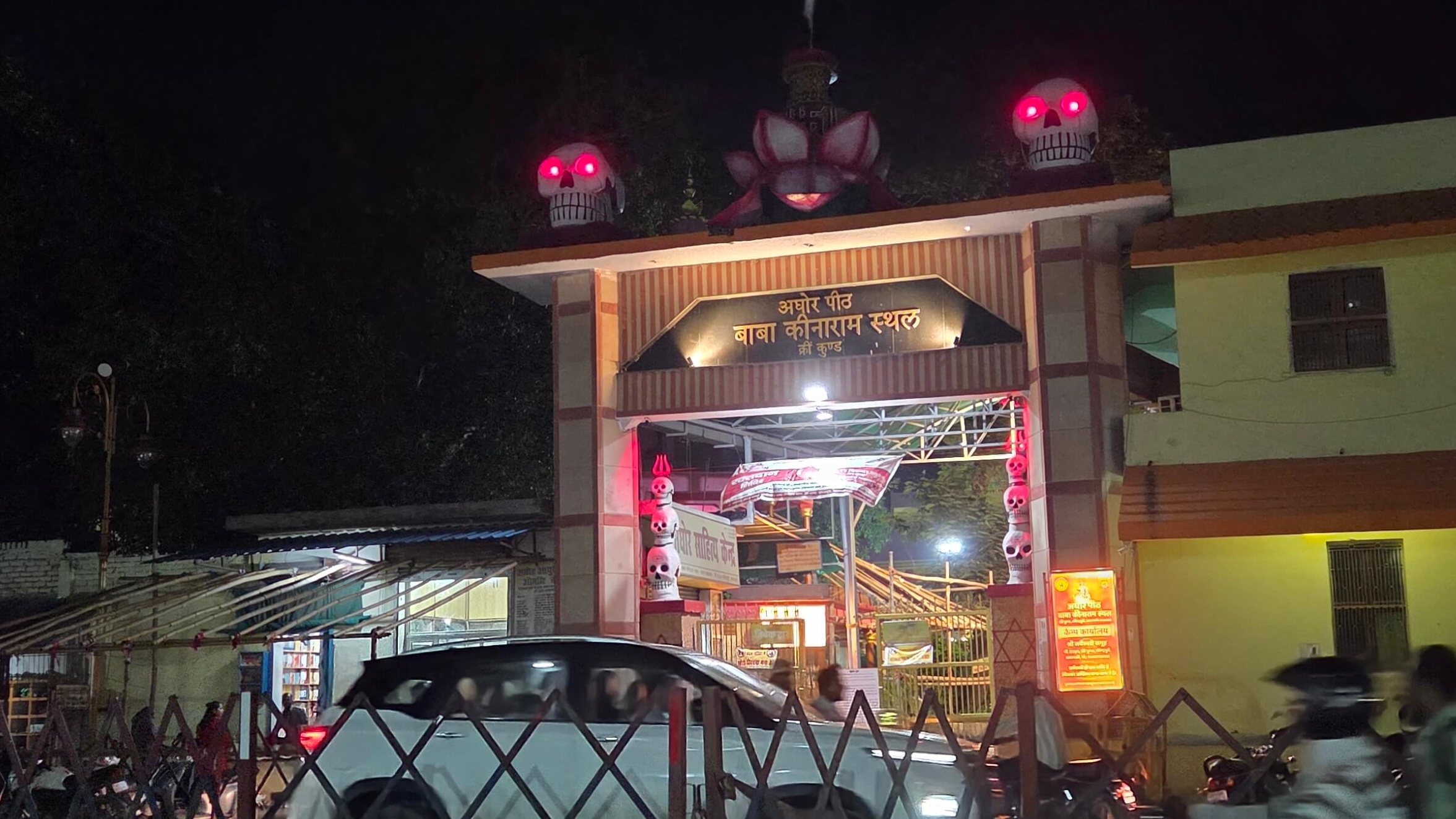
In the Shivala–Ravindrapuri area lies Baba Keenaram Sthal, Kring Kund, commonly known as Baba Keenaram Ashram or Aghor Peeth. The institution describes Kring Kund as the headquarters and an important spiritual centre of the Aghor tradition.
The entrance itself immediately feels different from a conventional temple complex. Skull motifs, a lotus above the gateway and the quiet compound beyond it hint at a spiritual tradition built around confronting distinctions that people normally associate with purity, impurity, fear and attachment.
But Baba Keenaram Sthal is much more than its unusual imagery. It is a place connected with centuries of spiritual practice, an established lineage of gurus, and a tradition that increasingly emphasises knowledge, sadhana and service to society.
Who Was Baba Keenaram?
According to the Aghor Peeth's own tradition, Aghoracharya Baba Keenaram was born in 1601 in Ramgarh, in present-day Chandauli district near Varanasi. He later became one of the most influential figures associated with the revival and organisation of the Aghor tradition in Kashi.
The tradition connects Baba Keenaram with Bhagwan Dattatreya, whom he is believed to have encountered through Baba Kaluram. The site at Kring Kund preserves this association, and a representation of Dattatreya remains part of its spiritual landscape.
Baba Keenaram eventually established himself in Varanasi, where he taught and served people. Works attributed to him include Viveksar, Ramgita, Ramrasal and Unmuniram, with Viveksar regarded within the tradition as an important text explaining Aghor philosophy.
The institution records Baba Keenaram as the first Peethadheshwar of the seat at Kring Kund, beginning the succession of spiritual heads associated with the Aghor Peeth.
What Does “Aghor” Actually Mean?
The word Aghor often brings dramatic images to mind because of the way Aghoris are portrayed in popular culture.
The philosophy represented at Baba Keenaram Sthal, however, is considerably broader.
The Aghor Peeth describes Aghor as a simple and natural state of consciousness, a spiritual path concerned with moving beyond divisions and distinctions. Its teachings place importance on recognising the same divine reality in living beings rather than judging everything through conventional categories.
That makes a visit to Baba Keenaram Sthal especially interesting. It gives visitors an opportunity to encounter the Aghor tradition through an established spiritual institution rather than through sensational stories surrounding individual Aghori ascetics.
Kring Kund – The Heart of the Ashram
The ashram is frequently referred to as Baba Keenaram Sthal, Kring Kund. You may also see the name written as Krim Kund, Kreem Kund or Krin Kund in English transliterations.
The kund is one of the defining features of the complex and is treated as sacred within the tradition. The Aghor Peeth identifies it as a kund established by Baba Keenaram and describes the wider site as one of the principal centres of the Aghor lineage.
For a first-time visitor, it is worth spending a few moments here rather than simply walking quickly through the compound. Kring Kund forms part of the identity of the entire Peeth and helps explain why Baba Keenaram's name and this particular place in Kashi became so closely connected.
The Sacred Dhuni
Another important part of Baba Keenaram Sthal is its Pavitra Dhuni, or sacred fire.
Dhuni fires occupy an important place in several Indian ascetic traditions, and the one at Baba Keenaram Sthal is specifically highlighted by the institution as a sacred element of the Peeth.
The dhuni also connects today's ashram with the generations of Aghor practitioners who lived and practised here. Accounts preserved by the organisation mention earlier Peethadheshwars tending the sacred fire as part of their daily spiritual discipline.
Rather than treating it simply as another object to photograph, visitors should regard the area around the dhuni as an active religious space.
The Aughad Takht and the Aghor Lineage
Baba Keenaram Sthal is not merely a memorial dedicated to one saint. It is the seat of a continuing guru-parampara, or spiritual succession.
The institution documents a line of Peethadheshwars beginning with Baba Keenaram and continuing through generations of Aghor teachers. The present lineage lists Aghoracharya Baba Siddharth Gautam Ram Ji as the 11th Peethadheshwar; according to the organisation, he was enthroned in 1978.
This continuity is one of the reasons the site remains important to followers. Kring Kund is not simply a historical location—it continues to function as an active centre of the tradition.
Aghor Beyond Sadhana: The Importance of Service
One of the most interesting things about understanding Aghor through Baba Keenaram Sthal is seeing how strongly seva, or service, features in its contemporary identity.
The organisation repeatedly describes its approach through the idea that service itself is devotion. Its activities have included education, health camps and other forms of social work. Recent programmes reported by the institution include free medical and eye-care initiatives.
This side of the tradition is easy to miss if one's understanding of Aghoris comes only from images of cremation grounds and extreme ascetic practices.
For visitors, Baba Keenaram Ashram therefore offers a more complete perspective: Aghor is presented here not only as personal spiritual practice, but also as a path that can return the practitioner towards society and service.
Festivals and Important Days
The atmosphere at Kring Kund changes considerably during important dates connected with the Aghor lineage.
Baba Keenaram Janmotsav is among the significant annual occasions associated with Baba Keenaram. The organisation also observes events such as Lolark Shashti, Mahanirvana-related commemorations and Abhishek Diwas. Such occasions can attract large numbers of devotees to the Peeth.
If you want a quieter experience focused on observing the architecture and spiritual spaces, an ordinary weekday is likely to suit you better. If you want to experience the Peeth at its most vibrant, visiting during a major observance offers a completely different atmosphere.
What to Expect When You Visit
Baba Keenaram Sthal does not feel like one of Varanasi's heavily touristic attractions.
People come here primarily for worship, spiritual practice and darshan. You may see devotees sitting quietly, making offerings or spending time close to the kund and other sacred parts of the complex.
The best way to experience the ashram is therefore without rushing.
Give yourself time to notice the Kring Kund, sacred dhuni, shrines and other spaces within the compound. More importantly, remember that this is a functioning Peeth rather than a museum about the Aghori tradition.
Photography should be approached respectfully. Avoid photographing monks, worshippers, ceremonies or restricted religious areas without permission.
Visiting Baba Keenaram Ashram
Official name: Baba Keenaram Sthal, Kring Kund
Also known as: Baba Kinaram Ashram, Baba Keenaram Ashram, Aghor Peeth
Area: Shivala / Ravindrapuri, Varanasi
Address: B 3/335, Kring Kund, Shivala, Varanasi, Uttar Pradesh – 221005
Best suited for: Spiritual travellers, people interested in Varanasi's lesser-known traditions, history, philosophy and religious culture
Time to keep aside: Around 45–60 minutes for an unhurried visit
The official website currently provides the address and contact information but does not publish a clear daily visitor-hours schedule, so it is worth confirming access before making a special journey, particularly around festivals or ceremonies.
Visitor Etiquette
Keep conversations quiet around places of worship, do not interrupt people engaged in meditation or ritual, and ask before taking close-up photographs.
It is also better to arrive without expecting to “see Aghoris” as though the ashram were an attraction built around them. Approaching the place with curiosity about its history and philosophy produces a much more meaningful visit.
Why Baba Keenaram Sthal Is Worth Visiting
Varanasi is often described as a city where different strands of Indian spirituality have existed alongside one another for centuries. Baba Keenaram Sthal is a particularly powerful example of that diversity.
It introduces visitors to a side of Kashi very different from the crowded lanes around Kashi Vishwanath or the evening spectacle of the Ganga Aarti. Here, the focus shifts towards Aghor philosophy, guru lineage, spiritual discipline and seva.
For anyone trying to understand Varanasi beyond its most famous temples and ghats, Baba Keenaram Ashram at Kring Kund is one of the city's most fascinating spiritual places to explore.
It may look mysterious from the outside. Spend some time inside, however, and the place reveals something much more nuanced: a centuries-old tradition seeking a state beyond fear, division and prejudice, while keeping spiritual practice connected with service to others.